Showing posts with label Pork. Show all posts

Tuesday, August 30, 2016

Tocino (Pampanga Style)

Tocino or tosino is similar made out of pork ham or bacon. It has a reddish color with sweetest taste. Tocino is derived from the Spanish word is a cured meat product native from Pampanga in the Philippines. This is one of the favorites of Kapampangan or Cabalenian's and the rest of Pilipino's. This recipe is very easy and tasted like the Pampanga Best tocino product. Also you can add garlic to your tocino ingredients if you like garlic flavor.
Ingredients:
2 lbs. of meat pork with fat, sliced into 1/4 inch thick (The meat is sliced into thin strip)
1 pack of Mama Sitas or Mother's Best tocino Mix
1 cup of brown sugar
1/2 tbsp salt
red food color
Preparations:
1. Combined meat & all ingredients in a mix bowl with 2 drops of red food coloring.  Rub or toss the pork in the curing mixture. Make sure that the mixture is completely absorb the meat,  Place the pork in a zip-seal bag then place in container with lid.
2. Cover and kept refrigerated for about a week to cure. After a week of curing the meat, stacked the cure meat in a separate zip-seal bags. Make sure to push all air out of the bag before closing and freeze them for use on a future occasion.
3. To cook just put a little water in a skillet and boil. Let it cook until all the liquid has evaporated and the tocino starts to sizzle. Keep stirring to keep it from burning. 
4. Add a little drop of oil, fry until it has caramelized and brownish red in color.
5. When its done place the Tocino in a serving dish, serve with tomatoes and fried garlic rice as a breakfast. I love to eat this dish with white vinegar and plain steamed rice anytime lunch or dinner.

Thursday, February 25, 2016

Fried Pork And Scallops Dumplings

This recipe makes 75 dumplings also can be use minced chicken meat.
Ingredients:
1 cup coarsely chopped fresh scallops
600g ground pork
90g finely chopped spring onion or scallion
250-300g finely chopped cabbage
sea salt to taste
store bought dumpling wrappers
vegetable oil
Taiwanese black vinegar
finely shredded ginger soaked in clean water
corn stack or flour
water
Preparation:
1. Combine 2 tbsp of 1/2 cup of water. Combine the cabbage, spring onion, pork and scallops in mixing bowl add some salt, mix with your hands until just combined.
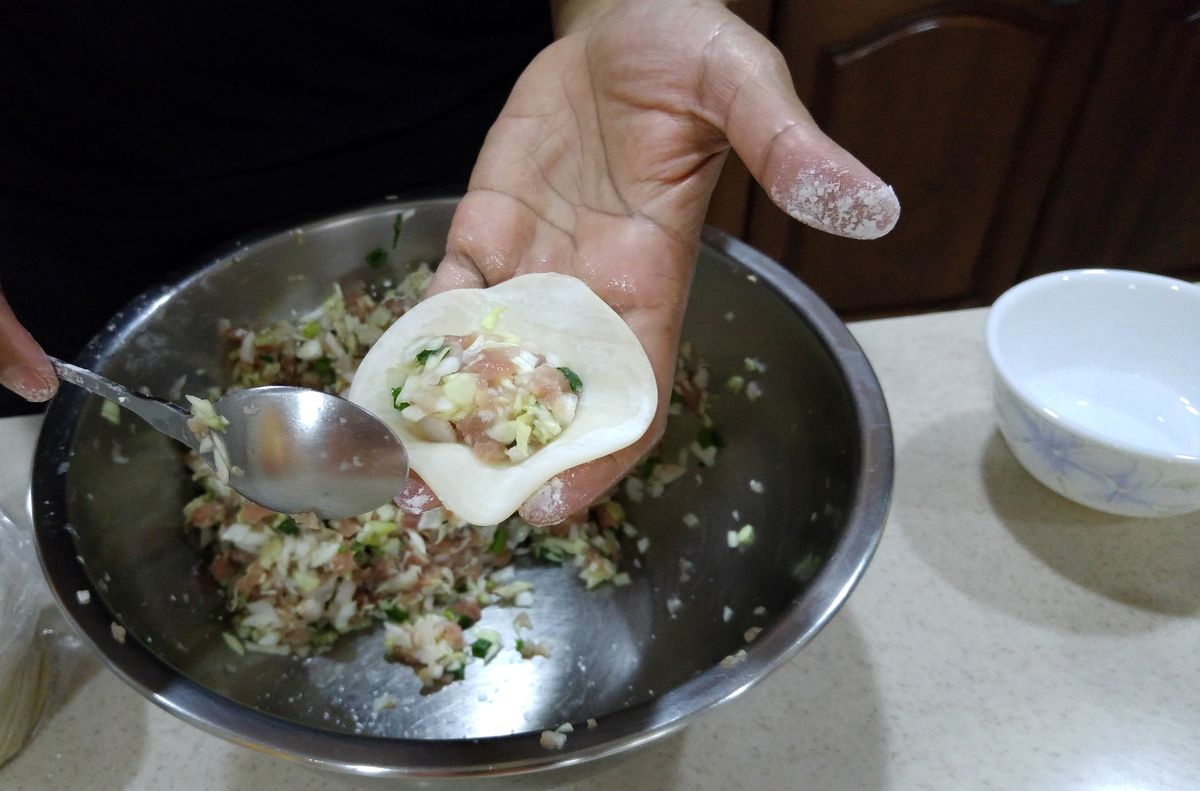
2. Place about a tablespoon of filling in the middle of the wrapper. With your finger or a pastry brush along with water and flour mixture paint the edge with water and fold into a half-moon shape like your making a Spanish empanadas, pleating one side 4 times as you go to ensure there are no holes.
If you have a hole, dumpling filling will leak out. Repeat the process until all of your wrappers have been filled and pleated. 
3. Place on a tray lined with wax paper, flattening the bottom. Try to give each dumpling space, so that they don’t stick to each other.
4. Heat a large nonstick skillet with 2 tsp of oil at slow medium heat. Add as many dumplings as you can, the dumplings are first fried on their flat side for 1 0r more minutes (do not flip them) Pour around 6-7 tbsp of water and sealed with a lid, let steamed for a while. 
5. When the water is evaporate add more water 6-7 tbsp use more if needed and boil-cook 8-10 minutes, until the liquid is absorbed and the dumplings are slightly translucent.
6. Add around 5 tbsp of flour mixture,
7. Cover and cook until brown and crispy. Served along with black vinegar and ginger.

Monday, November 11, 2013

Lechon Paksiw

One of my fam favorite Filipino dish is the Paksiw na Pata. There is actually an alternative to cooking lechon paksiw, you don't have to use a leftover meat from a whole lechon/roasted pig. This method is using a oven baked slow cook. Instead of reheating the same dish it bringing freshness to your pork paksiw. The lechon sauce and other condiment just make this dish so wonderfully savory with a touch of sweetness which is just as delicious.
Ingredients:
1½-2lbs pork hock- pork knuckle
2 pcs bay leaves
3 large garlic clove, crushed and coarsely chopped
1 medium size spanish red onion, sliced
1-2 tbsp grapeseed or any vegetable oil
10-15 whole black peppercorn
1 cup Mang Tomas lechon sauce
75ml soy sauce
¼ cup superfine asian brown or black sugar
1 cup datu puti plain white vinegar
2½ cup water
fish sauce
salt and pepper to taste
Preparation:
1. Preheat oven to 180°C. Wash and dry pork knuckle with paper towel. Cut the skin and meat with a sharp knife or get the butcher to do it for you. Rub salt and freshly ground black pepper into the skin and into the slits, then place in a roasting pan.
2. Bake for about one and a half hours to 2 hours or until meat turns golden brown and crispy. Remove pan from oven.
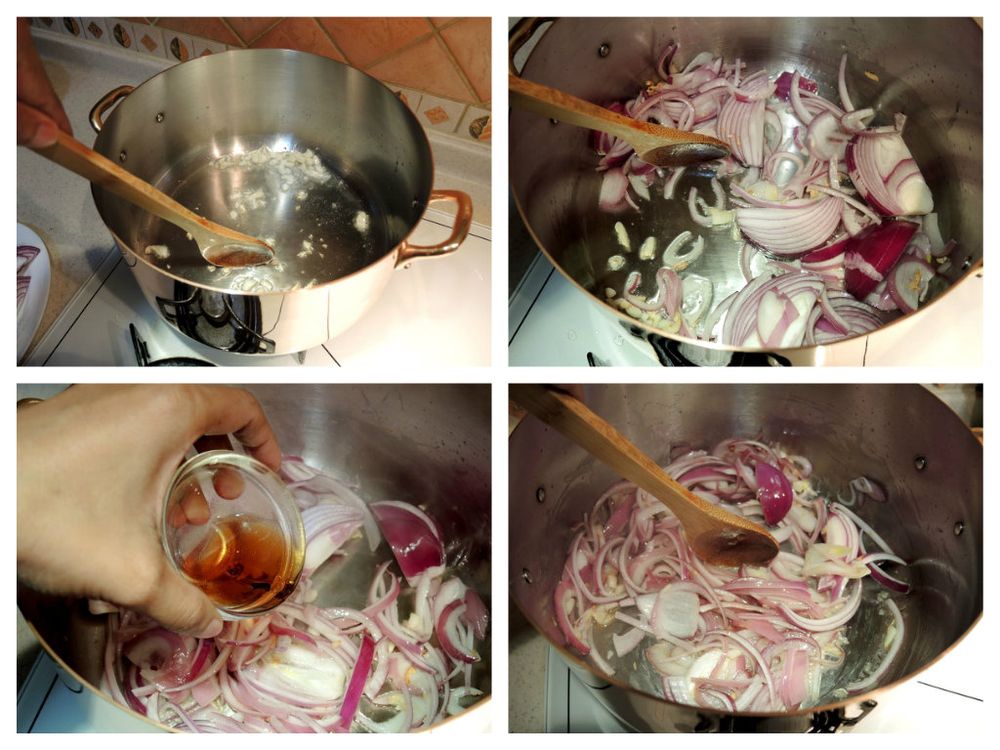
3. Heat oil in a 26 cast iron casserole, saute garlic and onion until on medium heat. stir occasionally until the fragrant.
4. In the casserole add the roasted pork knuckle, sugar, vinegar, soy sauce bay leaves, whole peppercorn and lechon sauce.
5. Then pour the water into the casserole.
6. Season with salt and pepper.
7. Cover and simmer on low heat approximately an hour or until the meat is tender. So that the fat from the skin and meat gets mixed in with the juices. Add more water as needed.
8.When the meat starting to fall off the bone and the fats from the juice. Skim excess fat from the casserole as necessary, if you are hearty and health conscious.
9. Add around 1 tbsp patis or fish sauce and sprinkle a little bit msg to adjust the seasonings as needed. Turn off the heat and serve with steamed rice.

Monday, April 22, 2013

Dinuguan or Tidtad (Pork Blood Stew)

This dish is one of my number 1 favorite Filipino dish. Dinuguan is a stew made of pork that has pig intestine usually including pig ears and everything in bizzare, cooked in its own blood with vinegar, laurel, garlic, onion and japaleños. It is similar to ancient Greek-Spartan melas zomos called the black soup. It may look disgusting and seems to be complicated bloody recipe, but it's delicious and worth all the trouble!
Ingredients:
800g pork butt or meat part is fine, cut to small pieces
700g  clean pork intestine, cut into chunks
3 tbsp fish sauce
3 laurel or bay leaves
4 garlic cloves, crushed and chopped coarsely
5 long green chilies (japaleños)+ 2 red small chili if you like
1 medium red onion, sliced
pig's blood
datu puti plain vinegar or white vinegar
salt and freshly ground black pepper
healthy msg
salt and pepper
Note: Pigs blood its easily find somewhere in supermarkets, ethnic small grocery store or public market here in Taiwan
Preparation:
1. Take 1 pigs blood is equivalent to 100g add some water just enough to make 3 cups, blend it, process it until just  right consistency for the soup base.
2. In a copper casserole or any heavy pot; heat oil over moderate medium heat, saute garlic until lightly brown then add the onion until translucent. Then add fish sauce, stir until it start to sizzle and fragrant.
3. Add the pork meat.
4. Then saute until browned.
5. Add pork intestine into the casserole.
6. Followed by bay leaves, add around 1 tsp freshly ground black pepper and stir for 3 minutes.
7. Pour the blood into the casserole.
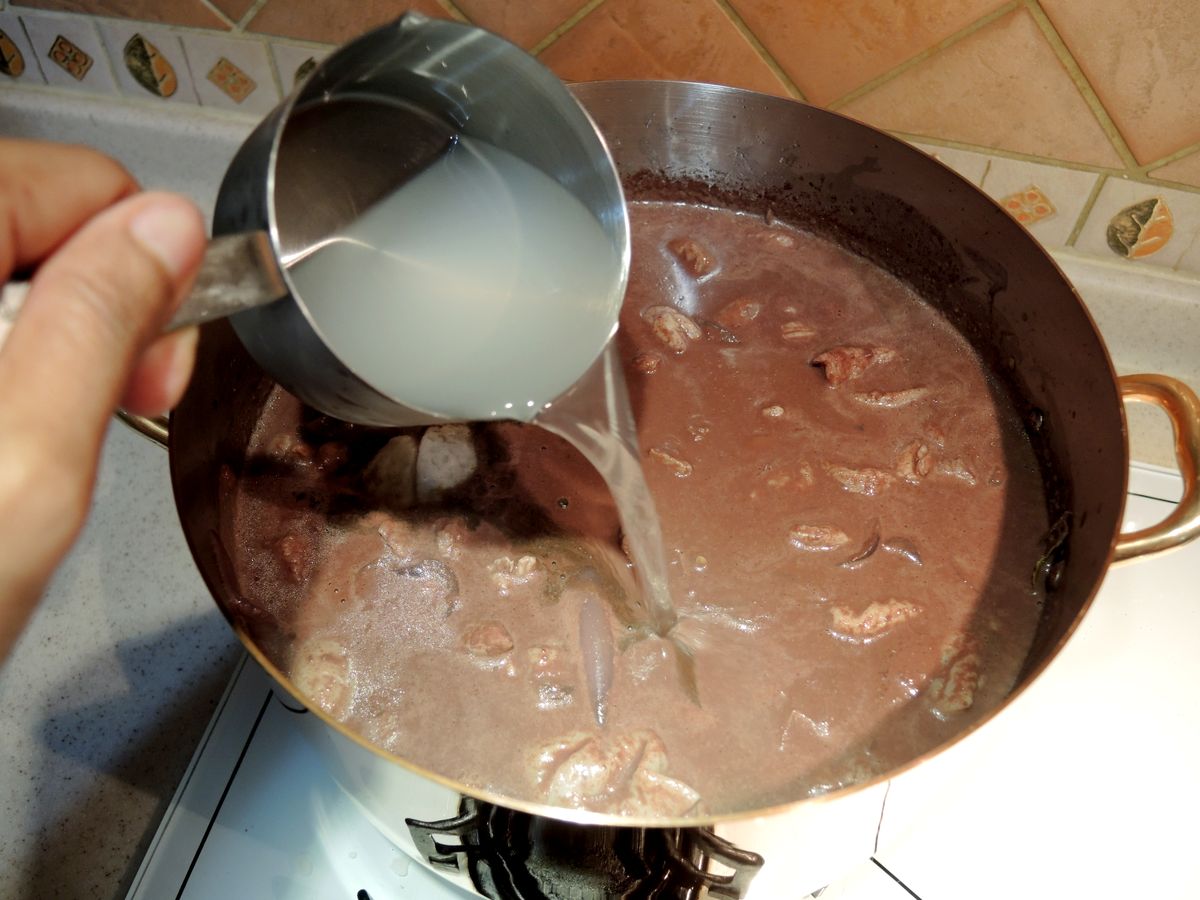
8. Add some water around 2 cups, stir well.
9. Add 2 cups vinegar, but I will go for 3 cups it helps to eliminate the strong taste from the blood.
10. Stir, uncovered the pan and  simmer slowly for 30 40 minutes or until blood is cooked and colour turn to black and thickens. All this time, the dinuguan should have been stirred occasionally.
11. After 30-40 minutes, add the chilies. I don’t like my chilies over cooked, the reason why I added last.
12.  Season with salt and msg as required, then stir and uncover.
13. Continue to simmer for about 5 or 10 minutes.
14. Once cooked, turn off the heat, cover and let the dinuguan or pork blood stew sit for awhile before serving. The stew gets more and more delicious even the next days!
15. Time to plate up and enjoy with steamed puto or steamed rice.

Saturday, December 29, 2012

Piña Ham-Homemade Sweet Ham Flavored in Pineapple

Baked ham is an iconic holiday "Noche Beuna" centerpiece. As a Filipina with western cultures, I prefer the sweeter version of the ham flavor in pineapple with this pininyahan hamon or piña jamon. Sure! you can order or buy a holiday ham in Costco or supermarkets. Making a ham from scratch it something that sounds hard to do and it seems it takes a long time, actually is very easy to make. Home curing your own ham its freely to access any flavor you want and less expense. Buy a fresh boneless pork leg in a market and ask the bucther a piece of shank portion leaving just enough fat on the meat. This important for the perfect carmelise to juicy meat ratio.This easy recipe yields a sweet and juicy of my piña ham. Its old fashioned, it's comforting, it makes the kitchen smell wonderful Christmas and it's good for the heavenly holiday season.
Ingredients:
pork leg (3-4 kilo)
10 tbsp sugar
7 tbsp salt
2 tsp salitre or cured meat powder
kitchen twine
medical injection or syringe
1.6 litre Del monte pineapple juice
5 garlic cloves, crushed
10 Jamaican peppercorn
1 bay leaves
cloves
pineapple slices
2 dijon mustard sauce
3 tbsp honey syrup
Preparation:
1. Combine salt, sugar and salitre in a bowl, then mix all ingredients. Rub some of these season ingredients well into the meat. Then used kitchen twine and tie the meat tightly to maintain it's shape during the curing and cooking process. This is a very important step in creating a successful end product. Set aside the seasoned meat in a glass bowl. Rub again all the remaining season ingredients. Then cover and refrigerate for one day.
2. Using a syringe fill it up with the meat juices that were left in the glass bowl and start injecting into the meat. Set the cured meat aside in the glass bowl, covered inside the refrigerator. Repeat the injecting process every day until no juices remain. I marinated this ham for about 1 week. You can keep the ham inside a air tight plastic bag in the freezer for a month or more. Put the ham in a deep casserole, add enough pineapple juice to cover the ham but not quite full to the top of the ham. Add the Jamaican peppercorn, 10 cloves, bay leave and garlic, feel free to improvise. I injected the pineapple juice in the ham everywhere and anywhere I could poke that needle and inject the goodness into the meat.
3. Bring to a boil and simmer gently for 2-3 hours, let the ham cool in its own liquid. The ham will continue to cook as the juice cools and this will allow the ham to soak up the flavor of the juice. If you plan to bake it directly to the oven, however, you may want to skip this step. Place the boiled ham in a baking dish and remove the twine. Preheat oven to 200°C and bake the ham for 30 minutes.
4. After 30 minutes baking in the oven. Remove the ham from the oven. Top with the pineapple rings, securing and stud them with cloves or toothpick. Place cherries or fresh cranberries into the centers of the rings, if  desired.
5. Combined the honey and extra strong dijon mustard, mix well.
6. Brush the ham on top of pineapple and de-glazed to help carmelized the fruit during baking process.
7. Return the ham to the oven and bake until heated through for 25-30 minutes. Basting  occasionally with the honey mixture. When done remove from oven and let stand for 10 minutes before carving, adding more jewel on the centers of the rings. Serve hot or cold in slices.
Suggestion: Best eaten while still hot served with mashed potato and pineapple reduction sauce. Enjoy! 
For the Sauce: 
Ingredients:
Remaining pineapple juice
1 tbsp dijon mustard
pinch of ground black pepper
cornstarch mix in 2 tbsp of water
Preparation:
1.While roasting the ham. Put the remaining juice in a saucepan, strain the peppercorns, cloves garlic and bay leave.
2. Bring to a boil over medium heat and simmer. Skim the fat off the liquid, reduce by half. Add the mustard and ground pepper. Continue to simmer for a couple minutes or until the glaze start to thicken. Add the cornstarch mixture stirring occasionally and simmer until thickened. When sauce has thickened, remove from heat and place on gravy boat.