Showing posts with label Filipino. Show all posts

Tuesday, August 30, 2016

Tocino (Pampanga Style)

Tocino or tosino is similar made out of pork ham or bacon. It has a reddish color with sweetest taste. Tocino is derived from the Spanish word is a cured meat product native from Pampanga in the Philippines. This is one of the favorites of Kapampangan or Cabalenian's and the rest of Pilipino's. This recipe is very easy and tasted like the Pampanga Best tocino product. Also you can add garlic to your tocino ingredients if you like garlic flavor.
Ingredients:
2 lbs. of meat pork with fat, sliced into 1/4 inch thick (The meat is sliced into thin strip)
1 pack of Mama Sitas or Mother's Best tocino Mix
1 cup of brown sugar
1/2 tbsp salt
red food color
Preparations:
1. Combined meat & all ingredients in a mix bowl with 2 drops of red food coloring.  Rub or toss the pork in the curing mixture. Make sure that the mixture is completely absorb the meat,  Place the pork in a zip-seal bag then place in container with lid.
2. Cover and kept refrigerated for about a week to cure. After a week of curing the meat, stacked the cure meat in a separate zip-seal bags. Make sure to push all air out of the bag before closing and freeze them for use on a future occasion.
3. To cook just put a little water in a skillet and boil. Let it cook until all the liquid has evaporated and the tocino starts to sizzle. Keep stirring to keep it from burning. 
4. Add a little drop of oil, fry until it has caramelized and brownish red in color.
5. When its done place the Tocino in a serving dish, serve with tomatoes and fried garlic rice as a breakfast. I love to eat this dish with white vinegar and plain steamed rice anytime lunch or dinner.

Monday, November 11, 2013

Lechon Paksiw

One of my fam favorite Filipino dish is the Paksiw na Pata. There is actually an alternative to cooking lechon paksiw, you don't have to use a leftover meat from a whole lechon/roasted pig. This method is using a oven baked slow cook. Instead of reheating the same dish it bringing freshness to your pork paksiw. The lechon sauce and other condiment just make this dish so wonderfully savory with a touch of sweetness which is just as delicious.
Ingredients:
1½-2lbs pork hock- pork knuckle
2 pcs bay leaves
3 large garlic clove, crushed and coarsely chopped
1 medium size spanish red onion, sliced
1-2 tbsp grapeseed or any vegetable oil
10-15 whole black peppercorn
1 cup Mang Tomas lechon sauce
75ml soy sauce
¼ cup superfine asian brown or black sugar
1 cup datu puti plain white vinegar
2½ cup water
fish sauce
salt and pepper to taste
Preparation:
1. Preheat oven to 180°C. Wash and dry pork knuckle with paper towel. Cut the skin and meat with a sharp knife or get the butcher to do it for you. Rub salt and freshly ground black pepper into the skin and into the slits, then place in a roasting pan.
2. Bake for about one and a half hours to 2 hours or until meat turns golden brown and crispy. Remove pan from oven.
3. Heat oil in a 26 cast iron casserole, saute garlic and onion until on medium heat. stir occasionally until the fragrant.
4. In the casserole add the roasted pork knuckle, sugar, vinegar, soy sauce bay leaves, whole peppercorn and lechon sauce.
5. Then pour the water into the casserole.
6. Season with salt and pepper.
7. Cover and simmer on low heat approximately an hour or until the meat is tender. So that the fat from the skin and meat gets mixed in with the juices. Add more water as needed.
8.When the meat starting to fall off the bone and the fats from the juice. Skim excess fat from the casserole as necessary, if you are hearty and health conscious.
9. Add around 1 tbsp patis or fish sauce and sprinkle a little bit msg to adjust the seasonings as needed. Turn off the heat and serve with steamed rice.

Monday, April 22, 2013

Dinuguan or Tidtad (Pork Blood Stew)

This dish is one of my number 1 favorite Filipino dish. Dinuguan is a stew made of pork that has pig intestine usually including pig ears and everything in bizzare, cooked in its own blood with vinegar, laurel, garlic, onion and japaleños. It is similar to ancient Greek-Spartan melas zomos called the black soup. It may look disgusting and seems to be complicated bloody recipe, but it's delicious and worth all the trouble!
Ingredients:
800g pork butt or meat part is fine, cut to small pieces
700g  clean pork intestine, cut into chunks
3 tbsp fish sauce
3 laurel or bay leaves
4 garlic cloves, crushed and chopped coarsely
5 long green chilies (japaleños)+ 2 red small chili if you like
1 medium red onion, sliced
pig's blood
datu puti plain vinegar or white vinegar
salt and freshly ground black pepper
healthy msg
salt and pepper
Note: Pigs blood its easily find somewhere in supermarkets, ethnic small grocery store or public market here in Taiwan
Preparation:
1. Take 1 pigs blood is equivalent to 100g add some water just enough to make 3 cups, blend it, process it until just  right consistency for the soup base.
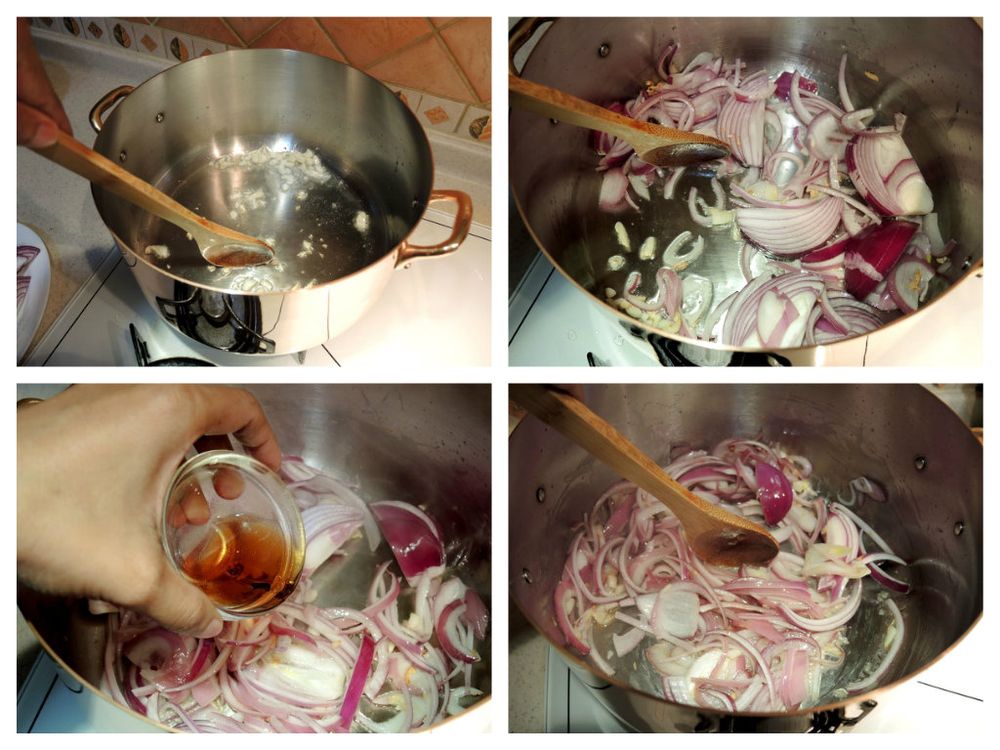
2. In a copper casserole or any heavy pot; heat oil over moderate medium heat, saute garlic until lightly brown then add the onion until translucent. Then add fish sauce, stir until it start to sizzle and fragrant.
3. Add the pork meat.
4. Then saute until browned.
5. Add pork intestine into the casserole.
6. Followed by bay leaves, add around 1 tsp freshly ground black pepper and stir for 3 minutes.
7. Pour the blood into the casserole.
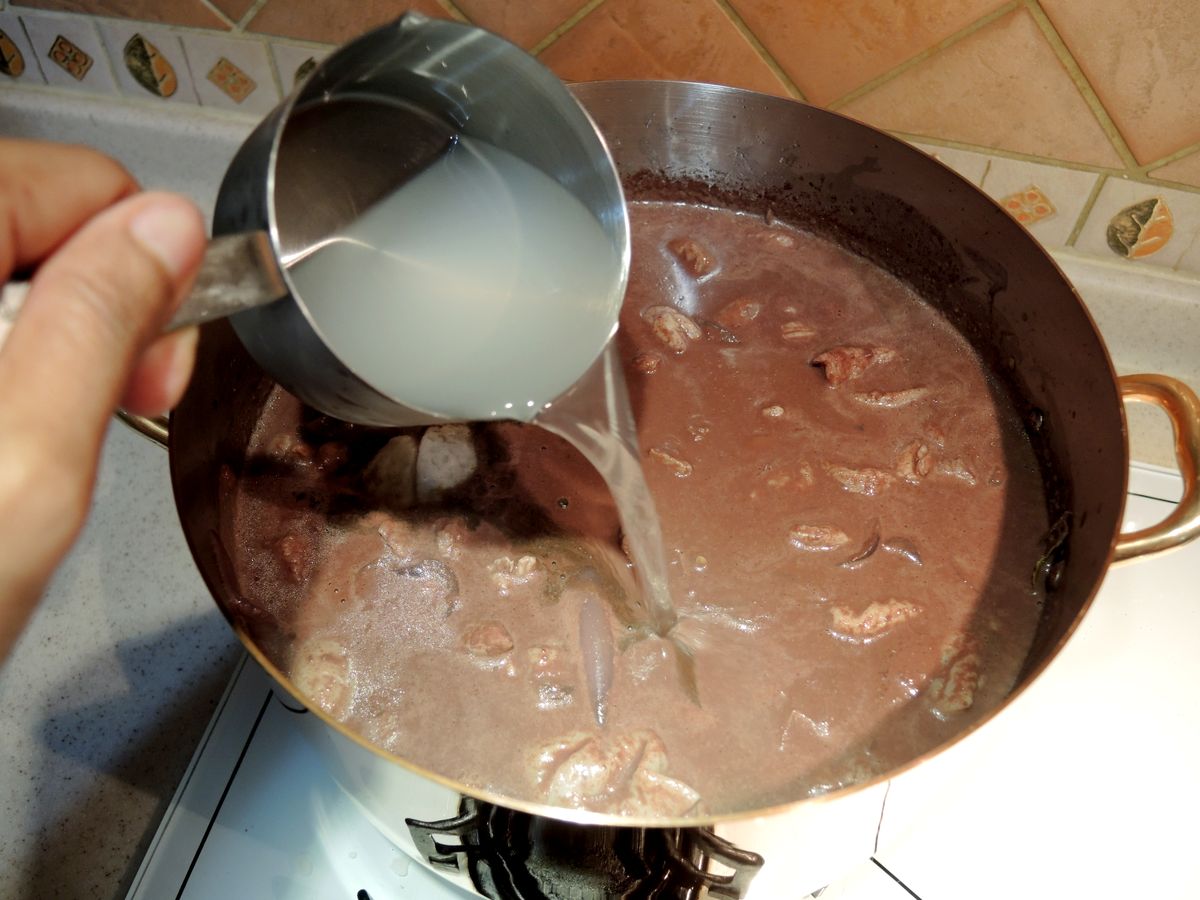
8. Add some water around 2 cups, stir well.
9. Add 2 cups vinegar, but I will go for 3 cups it helps to eliminate the strong taste from the blood.
10. Stir, uncovered the pan and  simmer slowly for 30 40 minutes or until blood is cooked and colour turn to black and thickens. All this time, the dinuguan should have been stirred occasionally.
11. After 30-40 minutes, add the chilies. I don’t like my chilies over cooked, the reason why I added last.
12.  Season with salt and msg as required, then stir and uncover.
13. Continue to simmer for about 5 or 10 minutes.
14. Once cooked, turn off the heat, cover and let the dinuguan or pork blood stew sit for awhile before serving. The stew gets more and more delicious even the next days!
15. Time to plate up and enjoy with steamed puto or steamed rice.

Saturday, March 30, 2013

Suman Verde Served With Latik

These sweet steamed sticky rice wrapped in banana leaves will be a hit with anyone who enjoys that wonderful suman that come with Pinoy merienda (snack) or desserts. Suman is usually made with lye water a kind of edible chemical subtance that adding extra flavor. But for my makeover suman, I like the using fine white sugar gives this dish and try adding a pandan extract which will give it a green color like fine jade. They also feature a nutty flavor of coconut condensed and flaked toasted coconut or latik on the outside. My family just loves this wonderful and easy steamed rice dumpling that's as truly delicious.
Ingredients:
3 cups glutinous rice or malagkit
2 cups white granulated sugar
1 tbsp condensed coconut
½ tsp pandan extract
pinch of salt to brings out the flavor
5x6 inch banana leaves
10x10 inch banana leaves
latik
Preparation:
1. Place the malagkit or sticky rice in a mixing bowl then pour in water and stir and allow to sit for at least 2-3 hours. In the meantime, prepare the banana leaves. Warm the whole banana leaf or cut into manageable pieces, large and small enough to wrap the rice dumplings, then clean with a soft cloth. Wash and rinse the rice, line colander with thin soy bean cloth or cheese cloth and let the rice drain out the excess water.
2. Put the sticky or glutinous rice back in the mixing bowl and combine with sugar, salt, pandan and condensed coconut.
3. Mix well until all the grains have an even color.
4. Arrange the banana leaves by placing the larger leaf then put the smaller leaf in the center. Spoon around 3 tbsp rice mixture into the center of the leaves. lengthwise, the shape of a log.
5. Roll them up and fold that side to enclose the rice.
6. Make another one the same size around 5 or 6 inches. Pair these 2 suman with the folded sides together, then tie the two ends together tightly.
7. In a copper casserole pot or heavy pot. Place the parcels or wrapped rice mixture, add enough water to cover the suman. Cover and boil at medium heat for 1 or 1½ hours until it is cooked completely. The simmering time depends on the type of your pot.
8. When its boiled, the banana leaf imparts a lovely aroma to the suman.
9. Transfer the suman on a colander to drain the excess water.
10. Take the suman, cut the string and unwrap then discard the banana leaves. Serve hot or cold, but still far from perfection, of course best eaten while still hot, serve with  latik or toasted coconut. Add more sugar on top of the suman if you want. Enjoy them with a smile!
Note:
Suman may be kept in the refrigerator for up to 2 weeks.  They also survive the freezing process for couple of months. The quantity of these ingredients it yield 16 or 18 suman.

Saturday, March 9, 2013

Ginataang Mais With Macapuno

My version of ginataang mais with macapuno. Ginataang mais is a Filipino rice and corn sweet dessert or rice pudding and it really brings back a lot of memories of my grandmother Anastacia. There is one ingredient that not really a very traditional Filipino ginataang mais. I found out that the black rice it has a nutty flavor which makes this ginataan extra enjoyable to eat. Black rice is a type of whole grain glutinous rice usually eaten in Thailand. If you can't find black rice, just white glutinous rice that would be great. You can use corn kernel in a can but fresh is always best. This dish is that it can be served warm or cold, after meal or just a snack that every Filipino loves!
Ingredients:
4pcs fresh corn kernels
½ cup black sticky rice
1 ½ cup glutinous rice or malagkit
8-10 cups coconut milk
1 ½ cup granulated white sugar
2 tbsp vanilla extract
1 cup macapuno
a dash of salt
coconut cream
Preparation:
1. Put the black rice in a deep bowl and pour in cold water and soak for overnight. Drain the rice, wash and rinse through your fingers to clean it then drain. Repeat until the water comes clean.
2. Remove the fibers and outer skin, rinse and use a sharp knife to shred the corn from the cobs. Set aside.
3. In a copper pot or any heavy pot, mix all ingredients except for corn and cream, cover and heat until boiling.
out 20 minutes or until the rice and corn are cooked. By the way don't cooked too much, the rice it should be cook in al dente and not too soft it should be close to risotto.
5. Add the macapuno or fresh grated buco strips even better. Stir every now and then to prevent it from sticking to the pot., uncovered and cooked and boil for another 10 minutes. Add more water if necessary.
6. Add around 1 cup of coconut cream.
7. When the coconut cream has been absorbed, remove from the heat.
8. Serve hot or cold and drizzled some coconut cream on top if desired.